


Raspberry Pi history begins on February 29, 2012, when a $35 single-board computer launched with the goal of reviving computer science education in UK schools. Eben Upton, then at the University of Cambridge Computer Laboratory, created it after observing a decade-long decline in students arriving at university with programming experience. The Foundation expected to sell ten thousand units. They sold ten thousand units on the first day. By 2022, over 60 million Raspberry Pi boards had shipped across education, hobbyist, and industrial deployments worldwide. This article covers the origin story, the six key hardware generations from Pi 1 through Pi 5, and where the platform stands in 2026.
Last reviewed: May 2026 | Sources: Raspberry Pi Foundation official documentation, Eben Upton interviews, and Foundation annual reports
Key Takeaways
- Raspberry Pi launched on February 29, 2012, a leap day. The Foundation initially planned to sell 10,000 units. The servers hosting the Foundation website crashed on launch day from demand. Both the $35 Model B (with Ethernet) and the $25 Model A (without) sold out within hours, forcing a months-long waitlist.
- The Raspberry Pi Foundation is a registered UK charity. It uses profits from Pi sales to fund computing education initiatives, provide free curriculum resources, and run the Code Club and CoderDojo programmes that reach millions of young people globally. Purchasing a Pi directly funds educational access to computing.
- Each hardware generation increased performance significantly while holding the price. Pi 1 to Pi 2 delivered roughly 6x the CPU performance at the same $35 price. Pi 4 added USB 3.0, Gigabit Ethernet, and dual 4K HDMI for the first time. Pi 5 added PCIe Gen 2 (enabling NVMe storage), a hardware real-time clock, and a 2-3x CPU speed increase over Pi 4.
The Origin: Why Raspberry Pi Was Created
In the early 2000s, Eben Upton was an admissions tutor at St John’s College, Cambridge, and noticed that university applicants’ programming skills had deteriorated significantly compared to the generation that grew up with the BBC Micro and Spectrum in the 1980s. Those machines required interaction with a programming environment on every boot. Modern PCs did not. Upton theorised that removing the friction-free path to programming (replacing a BASIC prompt with Windows) had removed the opportunity for casual programming exploration that produced the previous generation of computer scientists.
Between 2006 and 2008, Upton and colleagues at the Cambridge Computer Laboratory began prototyping an affordable computer that would restore that frictionless path. Early prototypes used Atmel microcontrollers and were far from what the final product became. The decision in 2008 to build around Broadcom’s BCM2835 system-on-chip (the same chip used in certain mobile phones) made mass production at low cost viable. By August 2011, the board design was finalised. The Raspberry Pi Foundation was incorporated as a charitable organisation in May 2009 to own and develop the project.
The name combines two elements: “Raspberry” follows the tradition of fruit-named computers (Apple, Apricot, Acorn), and “Pi” refers to Python, the language the Foundation intended to be the primary teaching language on the device.
Raspberry Pi History: Generation by Generation

Pi 1 (2012). The original Model B launched February 29, 2012, with a single-core ARM11 processor at 700MHz, 256MB RAM, 2x USB, HDMI, and 26-pin GPIO. The $25 Model A followed without Ethernet. The Model B+ in 2014 added a 40-pin GPIO header and microSD slot (replacing full-size SD), establishing the GPIO pinout that every Pi model has maintained since. The Pi 1 was manufactured at the Sony factory in Pencoed, Wales, where all current Pi production also takes place.
Pi 2 (2015). The Pi 2 Model B replaced the ARM11 single-core with a quad-core Cortex-A7 at 900MHz and doubled RAM to 1GB, delivering roughly 6x the computational performance of the Pi 1 at the same $35 price. The Pi 2 v1.2 updated the SoC to BCM2836 and later BCM2837, adding ARMv8 64-bit support. The Pi 2 was the first model capable of running Windows 10 IoT Core.
Pi 3 (2016). The Pi 3 Model B added built-in 2.4GHz WiFi and Bluetooth 4.1 for the first time. No USB dongle required. The processor upgraded to a quad-core Cortex-A53 at 1.2GHz. The Pi 3B+ (2018) added dual-band WiFi (2.4GHz and 5GHz), Gigabit Ethernet via USB 2.0 bridge (limited to ~300 Mbps throughput), and PoE header support. The Pi 3 was the first generation to be genuinely usable as a lightweight desktop.
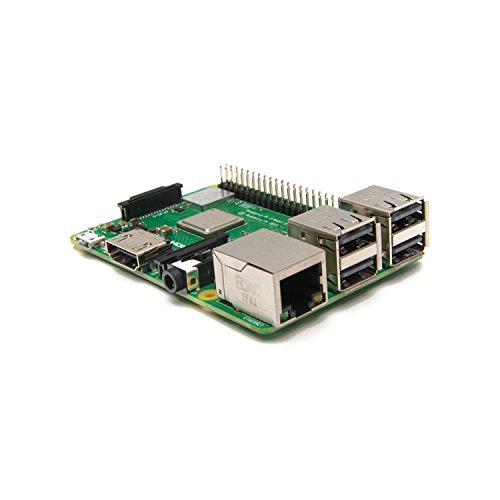
Pi 4 (2019). The Pi 4 Model B was the most significant hardware generational leap. The BCM2711 SoC brought a quad-core Cortex-A72 at 1.5GHz, true Gigabit Ethernet (dedicated controller rather than USB-bridged), USB 3.0 ports, dual micro-HDMI with 4K/60Hz support, and RAM options of 1GB, 2GB, 4GB, and 8GB. The Pi 4 was the first Pi fast enough to serve as a practical homelab server. Initial Pi 4 units ran hot and required thermal management. Firmware updates and improved cooling designs addressed this. Pi 4 pricing started at $35 (2GB) and reached $55 for the 8GB variant.
Pi Zero 2W (2021). The Pi Zero 2W updated the $15 Pi Zero form factor with a Cortex-A53 quad-core processor in a package-on-package arrangement with 512MB LPDDR2 RAM. It is approximately 5x faster than the original Pi Zero W on CPU tasks while keeping the same tiny 65mm x 30mm board dimensions, single micro-USB data port, and 2.4GHz WiFi. The Zero 2W is the current recommended Pi for Pi-hole, lightweight IoT sensors, and embedded builds where cost and size dominate over performance.
Pi 5 (2023). The Pi 5 is the current flagship. The BCM2712 SoC uses a quad-core Cortex-A76 at 2.4GHz, approximately 2-3x faster than Pi 4 on CPU-bound tasks. The Pi 5 introduced a PCIe 2.0 interface via the FFC connector, enabling NVMe storage via the M.2 HAT+. It added a dedicated power management chip (PMIC), a hardware real-time clock with battery header, and a PCIe-connected RP1 I/O controller that handles USB and Ethernet independently of the SoC. Pi 5 starts at $60 (4GB) and $80 (8GB). A 16GB variant was announced in 2024 for compute-intensive applications.

- What you Get: Raspberry Pi 5 8GB Ram Board X1
- Raspberry Pi 5 8GB Board: Raspberry Pi 5 board is equipped with a 64-bit quad-core Arm Cortex-A76 processor running at 2…
- Better network performance: Wireless network performance has also been improved, with Raspberry Pi 5 supporting 802.11ac…
Impact: Education, Industry, and the Maker Community
The Raspberry Pi Foundation’s educational impact is measurable. Code Club, which the Foundation acquired in 2015, runs free coding clubs for children aged 9-13 in over 180 countries. CoderDojo, acquired in 2017, operates free volunteer-led coding clubs globally. The Foundation publishes the Raspberry Pi Magazine (The MagPi), free educational resources at raspberrypi.org, and the Hello World magazine for educators. All profits from Pi sales fund these programmes.
Industrial deployment grew significantly after the Pi 4. Raspberry Pi Trading (the commercial arm of the Foundation) launched the Raspberry Pi Compute Module series specifically for industrial OEM use. The CM4 and CM5 are pin-compatible modules designed for integration into custom carrier boards. Industrial customers include manufacturers, medical device makers, and digital signage companies. The CM4 became one of the most widely deployed embedded Linux modules in its price range.
The maker community built the third pillar of Pi’s success. Projects like Pi-hole (2014), RetroPie (2012), and Octoprint (2012) emerged in Pi’s first year and remain actively maintained over a decade later. Home Assistant, now the leading open-source home automation platform, officially supports Pi as its primary deployment target. The ecosystem of HATs (Hardware Attached on Top), add-on boards, and Pi-specific software has grown to thousands of products and projects.
Raspberry Pi History in 2026: Current Models and What Comes Next
As of 2026, the active Raspberry Pi lineup includes the Pi 5 (4GB, 8GB, 16GB), Pi 4 (1GB through 8GB, still in production), Pi Zero 2W, Pi Zero W, Pi Pico and Pico 2 (RP2040/RP2350 microcontrollers), and the Compute Module 4 and 5. The Pi 400 (keyboard-integrated Pi 4) remains available for education markets.
The supply chain disruption of 2021-2022 caused significant Pi shortages and price increases from third-party resellers. The Foundation prioritised industrial and commercial customers during the shortage, which frustrated hobbyists. By 2023-2024, production normalised and stock returned to retail availability at official prices.
Raspberry Pi Ltd. listed on the London Stock Exchange in June 2024 in an IPO that valued the company at approximately 542 million GBP. The Foundation retains its charitable status and mission. The IPO proceeds fund continued development and production capacity. The Pi 5 with NVMe via M.2 HAT+ is the current recommended platform for any always-on homelab service. For hardware selection guidance, see Raspberry Pi Models Compared: Specs, Prices, and Use Cases. For what to build with the current hardware, see Best Raspberry Pi Projects: 10 Proven Builds Worth Starting.
FAQ
When was the Raspberry Pi invented?
The concept originated in 2006 when Eben Upton and colleagues at the Cambridge Computer Laboratory began prototyping affordable computers for education. The Raspberry Pi Foundation was incorporated as a charity in 2009. The first production boards shipped and the Pi officially launched on February 29, 2012 (a leap day). The original launch date was slightly earlier in February but the simultaneous release through Premier Farnell and RS Components is dated February 29.
Who created Raspberry Pi?
Eben Upton created the original concept and led the project from prototype to production. He was joined by co-founders Jack Lang, Alan Mycroft, Pete Lomas, Rob Mullins, and David Braben at the Raspberry Pi Foundation. Upton served as CEO of Raspberry Pi Ltd. (the trading arm) from its founding and continues in that role. The broader engineering team at the Cambridge Computer Laboratory contributed to the hardware and software design of the early boards.
How many Raspberry Pi have been sold?
The Raspberry Pi Foundation reported selling over 60 million units by the end of 2022. Sales slowed during the 2021-2022 supply shortage when commercial customers were prioritised. With the June 2024 IPO prospectus, cumulative unit sales exceeded 65 million. The Pi 4 is the best-selling individual model, with the Pi Zero line (including Zero W and Zero 2W) collectively accounting for a significant share of educational and embedded deployments.
Why was the Raspberry Pi created?
To address a decline in computer science skills among UK university applicants. Eben Upton observed in the early 2000s that students arriving at Cambridge with genuine programming experience had dropped significantly from the generation that grew up with BBC Micros and Spectrums. He attributed this to modern PCs being consumer devices rather than programming tools. The Pi was designed to be affordable enough for schools and students, programmable enough to teach real computer science, and fun enough to engage young learners outside the classroom.
What is the difference between Raspberry Pi 4 and Pi 5?
Pi 5 uses a Cortex-A76 processor at 2.4GHz versus the Pi 4’s Cortex-A72 at 1.5-1.8GHz, delivering 2-3x CPU performance. Pi 5 adds a PCIe Gen 2 interface for NVMe storage via the M.2 HAT+ (400-900 MB/s versus 30-40 MB/s from microSD), a hardware real-time clock with battery backup, and dedicated power management. Pi 5 starts at $60 versus Pi 4 at $35-55. For homelab and self-hosted service deployments, Pi 5 with NVMe eliminates the SD card I/O bottleneck that causes database corruption on Pi 4 builds running Home Assistant or Docker. For a full comparison, see Raspberry Pi Models Compared.
References:
- Raspberry Pi Foundation history: raspberrypi.org/about
- Eben Upton interview, Ars Technica (2012): arstechnica.com
- Raspberry Pi IPO prospectus (2024): londonstockexchange.com
- Raspberry Pi products: raspberrypi.com/products
About the Author
Chuck Wilson has been programming and building with computers since the Tandy 1000 era. His professional background includes CAD drafting, manufacturing line programming, and custom computer design. He runs PidiyLab in retirement, documenting Raspberry Pi and homelab projects that he actually deploys and maintains on real hardware. Every article on this site reflects hands-on testing on specific hardware and OS versions, not theoretical walkthroughs.
Historical content reviewed against official Raspberry Pi Foundation sources, May 2026.